EXPERIENCE ROXY'S PET SHOP CARE SHEETS
Snake Care Series
Important Notice
If you have any concerns about your snake’s health, behaviour, feeding, shedding, or enclosure conditions, please seek advice from a qualified reptile or veterinary professional as soon as possible. Snakes often mask signs of illness, and early veterinary care is essential for their wellbeing.
1. Corn Snakes (Pantherophis guttatus)
Overview: Docile, small to medium-sized snakes popular for their color morphs and beginner-friendly care. Lifespan: 15–20 years.
Housing:
- Juveniles: 10–20 gallon terrarium
- Adults: 20–40 gallon long tank
- Substrate: Aspen shavings, cypress mulch, or paper towels (avoid cedar/pine)
- Hides: At least two hides, warm and cool sides
- Climbing: Branches, cork bark, artificial plants
- Temperature: Warm side 85–88°F, cool side 75–78°F, night 70–75°F
- Heating: Heat mat or ceramic heat; optional basking lamp with cage
- Lighting: Day/night cycle; UVB not required
Diet:
- Hatchlings: pinky mice; Juveniles: fuzzies; Adults: adult mice or small rats
- Feed according to size; hatchlings every 5–7 days, adults 10–14 days
- Provide shallow water dish, changed daily
Behavior: Nocturnal to crepuscular, calm, curious; avoid handling 48 hours after feeding
Sexing: Males have longer, thicker tails; females shorter tapering tails
Maintenance: Daily spot checks and water, weekly spot-cleaning, monthly deep-clean
2. Ball Pythons (Python regius)
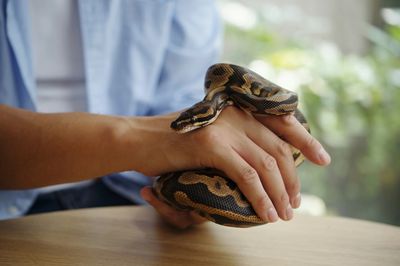
Overview: Small, shy constrictors from Africa, known for curling into a ball when stressed. Lifespan: 20–30 years.
Housing:
- Juveniles: 20 gallon tank
- Adults: 36–55 gallon long terrarium
- Substrate: Aspen, cypress mulch, or newspaper
- Hides: Two hides minimum, one warm, one cool
- Climbing: Minimal; mainly terrestrial
- Temperature: Warm side 88–92°F, cool side 78–80°F, night 72–78°F
- Heating: Heat mat or ceramic heat; optional basking lamp with cage
- Lighting: Day/night cycle; UVB optional
Diet:
- Small rodents appropriate to snake size; juveniles every 5–7 days, adults every 10–14 days
- Provide shallow water dish
Behavior: Nocturnal, generally docile; handle gently and not immediately after feeding
Sexing: Males have longer tails; females are bulkier and rounder
Maintenance: Daily water and observation, weekly spot-cleaning, monthly full clean
3. King Snakes (Lampropeltis spp.)
Overview: Medium-sized, active snakes with striking banding or patterning; hardy and beginner-friendly. Lifespan: 15–20 years.
Housing:
- Juveniles: 10–20 gallon tank
- Adults: 20–40 gallon long tank
- Substrate: Aspen, cypress, or paper towels
- Hides: At least two; climbing branches optional
- Temperature: Warm side 85–88°F, cool side 75–78°F, night 70–75°F
- Heating: Heat mat or ceramic heat with cage
- Lighting: Natural day/night cycle; UVB not required
Diet:
- Small rodents appropriate to size; juveniles every 5–7 days, adults every 10–14 days
- Provide water dish, changed daily
Behavior: Diurnal/nocturnal depending on species; curious and active but generally docile
Sexing: Males have longer, thinner tails; females shorter, stockier tails
Maintenance: Daily water, weekly spot-clean, monthly deep clean
4. Milk Snakes (Lampropeltis triangulum)
Overview: Small to medium, colorful, non-venomous snakes; hardy and easy to care for. Lifespan: 15–20 years.
Housing:
- Juveniles: 10–20 gallon tank
- Adults: 20–40 gallon long tank
- Substrate: Aspen shavings, cypress mulch, or paper towels
- Hides: Two hides minimum
- Temperature: Warm side 85–88°F, cool side 75–78°F, night 70–75°F
- Heating: Heat mat or ceramic heat; basking lamp optional with cage
- Lighting: Day/night cycle; UVB optional
Diet:
- Small rodents appropriate to size; juveniles every 5–7 days, adults every 10–14 days
- Shallow water dish changed daily
Behavior: Diurnal/nocturnal depending on species; docile but active foraging
Sexing: Males longer-tailed and thinner; females shorter and thicker
Maintenance: Daily water and observation, weekly spot-cleaning, monthly full clean
5. Boa Constrictors (Boa constrictor)
Overview: Larger, robust constrictors native to Central and South America; intelligent and responsive. Lifespan: 20–30+ years.
Housing:
- Juveniles: 20–30 gallon long tank
- Adults: Minimum 6–8 ft long enclosure, secure with locking lid
- Substrate: Aspen, cypress mulch, or newspaper; avoid sand or gravel
- Hides: Two hides minimum
- Climbing: Provide branches and shelves
- Temperature: Warm side 88–92°F, cool side 78–82°F, night 72–78°F
- Heating: Heat mat, ceramic heat, or basking lamp with cage
- Lighting: Day/night cycle; UVB optional
Diet:
- Juveniles: small rodents; adults: appropriately sized rats or rabbits
- Feed juveniles every 5–7 days, adults every 10–14 days
- Provide large, shallow water dish
Behavior: Mostly nocturnal; can become docile with regular handling but may strike if startled
Sexing: Males have longer tails and thicker cloacal spurs; females bulkier
Maintenance: Daily water and observation, weekly spot-clean, monthly deep clean
Conclusion of Snake Care Series
These snakes – Corn Snakes, Ball Pythons, King Snakes, Milk Snakes, and Boa Constrictors – are rewarding pets when provided species-appropriate housing, temperature gradients, hiding spots, diet, water, and maintenance.
Regular monitoring, proper feeding, hydration, and hygiene ensure these snakes thrive and can live long, healthy lives in captivity.